Bildon Steel Bildon Steel

Why Choose Steel Over Concrete for Commercial Buildings?

Time:2026-10-15 Author:Mason
0%

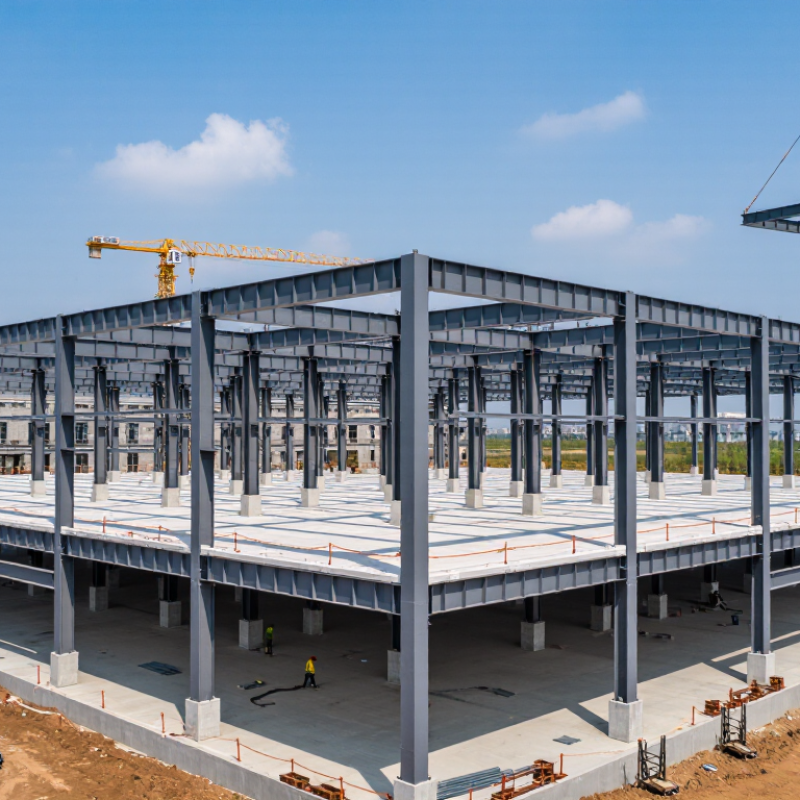
When owners evaluate a commercial building, the structural frame affects cost, schedule, safety, and future adaptability. The question “why choose steel structure over concrete for commercial buildings” deserves a measured answer, not a sales slogan. Steel provides high strength with relatively low structural weight, supporting efficient spans across offices, retail floors, and warehouses. Fabricators can cut, drill, and inspect members in controlled facilities before delivery. This precision can reduce site congestion and simplify erection. A steel frame may also create open interiors, where fewer columns improve displays, workstations, and loading routes. More usable space matters.

Still, steel is not a universal winner. Engineers must compare fire protection, corrosion exposure, vibration, acoustics, carbon impacts, and local building codes. Concrete may perform better in some environments or provide valuable thermal mass. Steel requires thoughtful detailing. Connections, coatings, insulation, and maintenance plans should be reviewed early. Experienced project teams also examine regional labor skills, transportation limits, and realistic installation conditions. A material that looks economical on paper may lose its advantage after changes, delays, or expensive protection systems. That part deserves honest attention.

Good decisions come from verified calculations, lifecycle comparisons, and advice from qualified structural professionals. Recycled steel content can support sustainability goals, but manufacturing energy and transport still require assessment. Owners should ask how the frame will perform after twenty or thirty years, not only on opening day. The answer may be steel, concrete, or a hybrid system. Each project has different risks. Careful judgment remains more valuable than confident marketing.
Why Choose Steel Over Concrete for Commercial Buildings?

Structural Performance and Design Flexibility of Steel Buildings

Steel offers commercial buildings a strong balance between structural performance and design flexibility. ASTM A992 structural steel provides a minimum yield strength of 345 MPa, according to the American Institute of Steel Construction. This strength supports longer spans with fewer interior columns. Retail floors stay more open. Tenants gain easier layouts.

The AISC 360-22 specification supports predictable design for beams, columns, connections, and stability systems. Engineers can also combine moment frames, braced frames, and composite floors. This allows buildings to respond to wind, seismic loads, and changing occupancy needs. Steel members arrive fabricated and ready for assembly. That can reduce on-site cutting and improve dimensional control. However, fast erection is not automatic. Connection complexity, delivery access, and trade coordination still affect the schedule.

Steel also supports future adaptation. A recent World Steel Association sustainability report notes that more than 680 million tonnes of steel are recycled globally each year. Reusable members and bolted connections can simplify some alterations. Designers must still protect steel from fire and corrosion. Concrete may perform better in certain thermal or acoustic conditions. Choosing steel requires honest comparison, not habit. A lighter frame is valuable, but only when detailing and construction quality support the design.

Construction Speed and Efficiency Compared with Concrete

Steel can shorten the construction schedule because much of its work happens before delivery. Fabricators cut, drill, and label members in a controlled facility. Crews then assemble them on site with bolts and limited welding. This reduces formwork, curing periods, and repeated layout work common in cast-in-place concrete construction.

The difference becomes visible on a busy commercial site. A steel frame may rise floor by floor while other trades prepare services below. Concrete frames often require forms, reinforcement checks, placement, and curing before the next level can proceed. Weather can slow these activities, especially during cold or wet conditions. Steel is not immune to delays, though. Poor measurements, late drawings, or missing connections can stop an entire crew.

Steel also reduces site congestion when deliveries are planned carefully. Fewer temporary supports may leave more room for lifts, workers, and material storage. Its lighter weight can reduce foundation demands, depending on the building design and local soil conditions. However, fire protection, acoustic control, and vibration requirements may add time and cost. These details are easy to underestimate.

The best results come from early coordination between engineers, fabricators, and installers. Digital models help identify clashes before materials reach the site. Still, software cannot repair unclear decisions. A realistic programme should include inspection time, delivery risks, and weather allowances. Speed matters, but careless speed creates expensive rework.

Lifecycle Costs, Maintenance, and Long-Term Value

Why Choose Steel Over Concrete for Commercial Buildings?

Lifecycle value is more than the initial bid. The Whole Building Design Guide reports that operations and maintenance can represent 60–85% of a building’s total lifecycle cost. Steel can reduce construction time, simplify future alterations, and limit foundation loads. A lighter frame may also mean less excavation and smaller foundations. These savings become visible when tenants change layouts or equipment loads increase.

Maintenance still demands discipline. Unprotected steel can corrode in humid or coastal environments. Modern coatings, sealed connections, and scheduled inspections reduce that risk. The National Association of Corrosion Engineers estimates that corrosion costs the global economy more than 2.5 trillion dollars annually. That figure includes many sectors, but it shows why maintenance planning matters. Concrete is not maintenance-free either. Cracking, water penetration, and reinforcement corrosion can create difficult repairs. Steel is often easier to inspect.

Tips: Compare full lifecycle costs, not just structural bids. Request environmental product declarations and maintenance assumptions. Check coating systems against local exposure conditions. The World Steel Association reports that steel is the most recycled material globally, with more than 650 million tonnes recycled each year. Reuse is possible, but not automatic. Design for bolted connections and future disassembly. I would not call steel the universal winner. Poor detailing can erase its advantages, while a well-designed concrete building may perform better in specific climates. The uncomfortable part is that early decisions remain estimates. Review them again before procurement.

Why Choose Steel Over Concrete for Commercial Buildings? - Lifecycle Costs, Maintenance, and Long-Term Value

Comparative planning data for a typical multi-story commercial building; actual results depend on location, structural system, design, occupancy, labor rates, and material specifications.

Evaluation Dimension Structural Steel Reinforced Concrete Long-Term Value Implication
Construction speed Steel advantage
Fabrication can take place off-site while foundations are being prepared. Factory-made members are typically delivered ready for bolted or welded erection.
Concrete baseline
Construction requires formwork, reinforcement placement, concrete placement, curing, stripping, and subsequent quality checks.
Shorter structural erection can allow earlier enclosure, fit-out, tenant occupancy, and revenue generation.
Typical floor-cycle planning About 3–7 days per floor is a commonly used planning range for repetitive steel-framed commercial construction, subject to site logistics and connection design. About 5–10 days per floor is a commonly used planning range for repetitive cast-in-place concrete construction, depending on the formwork system and curing requirements. Steel can reduce schedule-related financing, site overhead, and disruption costs when the design is repetitive and procurement is well coordinated.
Structural frame weight Steel frames are often lighter than comparable reinforced-concrete frames because steel has high strength-to-weight efficiency. Concrete frames are generally heavier, increasing gravity loads transferred to columns, foundations, and ground-supported elements. Lower structural weight may reduce foundation quantities and improve performance on weak or constrained sites; savings must be confirmed by structural design.
Future modification and expansion Highly adaptable
Bolted connections, accessible framing, and long-span options can simplify new openings, relocations, strengthening, and vertical or horizontal extensions.
More intrusive
Alterations may require scanning, demolition, temporary support, rebar cutting controls, and concrete repair or strengthening.
Adaptability can extend the useful life of a building and reduce costs when tenant layouts or building services change.
Typical maintenance focus Inspect exposed steel coatings, fire protection, connections, and areas subject to moisture accumulation. Interior protected steel normally requires limited routine structural maintenance. Inspect for cracking, spalling, water ingress, corrosion-related damage, joint deterioration, and carbonation or chloride exposure where relevant. Both systems require inspections. Steel maintenance is usually more predictable when moisture control and protective coatings are properly managed.
Fire protection requirement Steel generally requires a tested fire-resistance system, such as spray-applied protection, board protection, or intumescent coating, because strength decreases at elevated temperature. Concrete usually provides inherent fire resistance through its mass and cover to reinforcement, although member size, cover, joints, and spalling risk still require design verification. Concrete may have a lower initial fire-protection burden, while steel can provide design flexibility when the protection system is integrated early.
Corrosion and moisture risk Requires effective detailing, drainage, compatible coatings, and inspection in humid, marine, industrial, or chemically aggressive environments. Reinforcement corrosion can occur when carbonation or chlorides reach the reinforcing steel; repairs may be disruptive once cracking and spalling develop. Durability depends more on exposure classification, detailing, workmanship, and maintenance than on material selection alone.
Typical design service life A properly designed, fabricated, protected, and maintained steel frame can serve for many decades; service life is governed by corrosion protection, fire protection, connections, and use conditions. A properly designed and maintained concrete frame can also serve for many decades; service life is governed by durability design, cracking, reinforcement protection, and exposure. Neither material has a fixed universal lifespan. Planned inspection and renewal are more important than a simple material-only comparison.
Embodied carbon considerations Primary steel production is energy-intensive, but steel is highly recyclable and can incorporate recycled scrap depending on the production route and supply chain. Cement production is a significant source of process and energy emissions. Lower-carbon cement blends and supplementary cementitious materials can reduce concrete impacts. Whole-building carbon should include quantities, reinforcement, cement content, recycled content, transport, fire protection, coatings, maintenance, and end-of-life recovery.
End-of-life recovery Strong recovery potential
Steel members can often be dismantled for reuse or recovered through established recycling routes when connections and coatings are suitable.
Downcycling commonly used
Demolished concrete is frequently crushed for aggregate or fill; direct structural reuse is less common and more project-specific.
Design for disassembly and documented material information can improve residual value and reduce demolition waste.
Lifecycle cost sensitivity More sensitive to steel price, fire protection, corrosion protection, fabrication complexity, and erection access. More sensitive to cement and reinforcement prices, formwork cycles, labor availability, curing time, site access, and repair requirements. The lowest lifecycle cost is project-specific; early cost planning should include construction time, financing, maintenance, adaptability, and disposal—not only the initial frame price.
Best-fit commercial applications Office buildings, warehouses, retail centers, parking structures, industrial facilities, and projects requiring long spans, rapid erection, or future adaptability. Buildings requiring high mass, strong inherent fire resistance, vibration control, acoustic separation, or locally available concrete construction capacity. A hybrid solution can often provide the best balance, such as steel beams with a concrete deck, composite columns, or concrete cores with a steel frame.
Planning note: The comparison uses generally accepted construction-planning and durability principles rather than proprietary or brand-specific data. Cost and schedule values are indicative ranges, not bid prices or guaranteed project outcomes.
Technical basis: Common guidance from structural steel design standards, concrete durability standards, life-cycle assessment practice, fire-resistance testing requirements, and published construction-planning benchmarks. Project-specific structural calculations, quantity takeoffs, environmental product declarations, and local labor/material rates should be used for final decisions.

Sustainability, Recyclability, and Environmental Considerations

For commercial buildings, steel can offer a clearer path toward material recovery than many reinforced concrete systems. Its components can be separated, sorted, and recycled after demolition. Steel also supports bolted connections, which may allow future disassembly. That matters when a building changes use. It can reduce waste sent to landfills.

The environmental benefit is not automatic. Producing new steel requires significant energy, even when recycled scrap is included. Electric furnaces may reduce emissions, but their impact depends on electricity sources and regional infrastructure. Concrete can also be crushed for road base or recycled aggregate. However, this usually provides lower-value reuse than remelting steel into new structural products. Reliable comparisons require a whole-life assessment, not a single recycled-content figure.

Design decisions shape the result. Engineers can reduce steel quantities through efficient spans and lighter connections. They can also record material specifications for future recovery. On site, careful sorting prevents coatings, fasteners, and mixed waste from contaminating scrap. Small details matter. Yet recycling systems differ widely between regions, and transport can weaken environmental gains. Steel is not automatically greener. That is the uncomfortable part. A credible choice considers embodied carbon, service life, maintenance, reuse potential, local recycling capacity, and the building’s future occupants.

Fire Safety, Durability, and Building Code Requirements

Why Choose Steel Over Concrete for Commercial Buildings?

Fire safety is not a simple choice between steel and concrete. Steel loses strength when heated, so commercial structures usually require tested fire-resistance systems. These may include spray-applied coatings, board protection, or encasement. The correct solution depends on the building’s height, occupancy, and evacuation design. Steel is not automatically safer. However, its performance can be measured through documented fire tests and engineering calculations.

Durability also depends on the environment. Properly detailed steel frames can resist heavy loads, repeated use, and future alterations. In busy buildings, that flexibility matters when tenants change layouts or services. Moisture control remains critical. Poorly protected connections may corrode, especially near loading areas or coastal air. Regular inspections help, although inspection schedules are sometimes treated as optional. That is a costly mistake.

Building codes require more than selecting a structural material. They address fire ratings, load paths, connection design, corrosion protection, accessibility, and emergency exits. Local authorities may request stamped calculations, certified products, and inspection records. Requirements can differ between jurisdictions. A design accepted in one city may need revisions elsewhere. Engineers should review the current code edition before construction, not after problems appear. Small coordination gaps can delay approval and weaken an otherwise efficient steel project.

Why Choose Steel Over Concrete for Commercial Buildings?

Fire Safety, Durability, and Building Code Requirements

What the data shows: The 2021 International Building Code establishes structural-frame fire-resistance requirements from 0 to 3 hours depending on the construction type. Steel is noncombustible, but it can lose strength rapidly when heated, so rated steel frames commonly require tested fire-protection systems. Reinforced concrete often provides inherent fire resistance through its mass and concrete cover.

Steel can be advantageous where lighter weight, faster erection, long spans, future adaptability, and controlled fabrication are important. Final material selection must also consider corrosion exposure, member design, fire-protection costs, durability, local amendments, and the tested or code-listed assembly.

Source: 2021 International Building Code, Table 601, required fire-resistance ratings for building elements. Ratings shown are for structural frames in hours and may vary with occupancy, building height, sprinklers, and local code provisions.

FAQS

Why might steel suit a commercial building?

Steel can create longer spans with fewer interior columns. Retail floors gain more open space. Tenants can change layouts more easily. This benefit depends on accurate detailing and construction.

Does steel always reduce construction time?

No. Factory-fabricated members can reduce on-site cutting. Assembly may also improve dimensional control. Delivery access, connection complexity, and trade coordination still affect the schedule. Fast erection is not automatic.

How does steel support future building changes?

Bolted connections can simplify alterations and partial disassembly. Reusable members may support future adaptations. Designers should consider changing tenants, equipment loads, and service routes. Reuse is possible, but not guaranteed.

Is steel cheaper than concrete over the building’s life?

Not always. A lighter frame may reduce excavation and foundation sizes. Faster construction can also create indirect savings. Maintenance, fire protection, coatings, and repairs affect the final cost. The early estimate may be wrong.

What maintenance does a steel structure need?

Inspect connections, coatings, and moisture-prone areas regularly. Coastal air and humid loading zones need special attention. Sealed connections and suitable coatings can limit corrosion. Skipping inspections can become expensive.

How does steel perform during a fire?

Steel loses strength as temperatures rise. Commercial structures usually need tested protection systems. Options may include spray coatings, boards, or encasement. The right choice depends on occupancy, height, evacuation design, and local requirements. Steel is not automatically safer.

What building code issues should designers check?

Review fire ratings, load paths, connections, corrosion protection, accessibility, and emergency exits. Authorities may require calculations, product records, and inspection documents. Requirements can differ between cities. Check the current code before construction begins.

Is steel better than concrete in every situation?

No. Steel often supports flexibility and easier inspection. Concrete may perform better for certain thermal or acoustic needs. Climate, occupancy, maintenance, and detailing should guide the decision. Habit is a poor design method.

Conclusion

Choosing steel for commercial buildings offers a strong combination of structural performance, design flexibility, and construction efficiency. Steel provides excellent strength-to-weight capacity, allowing architects to create wide, open spaces, taller structures, and adaptable floor plans with fewer interior columns. Its components can be precisely fabricated before arriving on site, which often shortens construction schedules and reduces labor, material waste, and weather-related delays compared with concrete construction.

When evaluating why choose steel structure over concrete for commercial buildings, long-term value is equally important. Steel can be maintained, modified, and reused with relative ease, while its high recyclability supports more sustainable construction practices. Although fire protection and corrosion control must be carefully planned, modern coatings, insulation systems, and code-compliant designs help address these concerns. With proper engineering and regular maintenance, steel buildings can deliver durability, safety, lower lifecycle costs, and the flexibility needed to respond to future operational changes.

Mason

Mason

Mason is a seasoned marketing professional with a deep expertise in the company's offerings and a passion for driving brand awareness. With a strong background in digital marketing strategies, he has an innate ability to connect with diverse audiences and effectively communicate product benefits.......