 Bildon Steel
Bildon Steel
Bildon Steel
Moving heavy steel components is a controlled engineering task, not simply a matter of choosing a larger truck. Each beam, column, frame, or fabricated assembly creates different risks during loading, travel, and unloading. Weight distribution, lifting points, dimensions, center of gravity, and road conditions must be reviewed before movement begins. This guide explains how to transport heavy steel components to construction sites with practical planning and disciplined execution. It focuses on load assessment, suitable equipment, securement methods, route checks, and communication between fabricators, carriers, and site crews.
Small details matter. A sharp edge can cut a strap. A poorly placed timber can shift under vibration. Rain can reduce grip on steel surfaces, while strong wind can destabilize wide sections during lifting. Experienced teams use engineered lift plans, inspected cranes, rated chains, protective padding, and properly positioned restraints. They also confirm bridge limits, clearance restrictions, turning space, delivery timing, and ground conditions at the site. Never guess. Verify the numbers.
Safety procedures should follow applicable transport, lifting, workplace, and road regulations. Qualified personnel must inspect equipment and supervise critical operations. Still, no plan is perfect. A route may change, a crane pad may soften, or a component may weigh more than expected after finishing. Teams should pause, reassess, and document changes rather than forcing the schedule. Reliable transport depends on preparation, honest communication, and the willingness to correct assumptions before they become incidents.
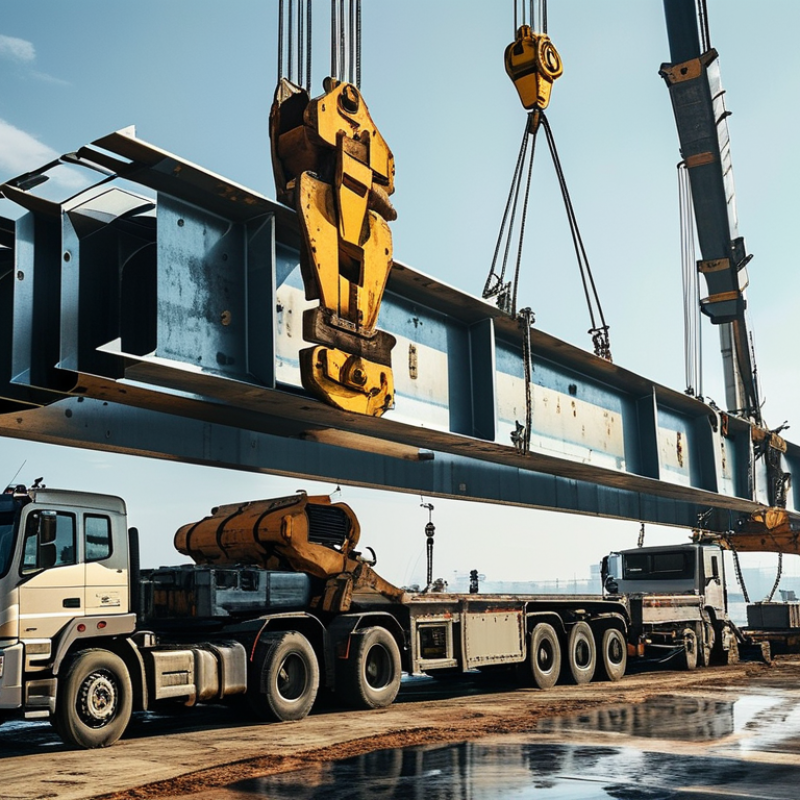
How to Transport Heavy Steel Components Safely?
Classify the Steel Component and Assess Its Transport Requirements
Safe transport starts with classification, not vehicle selection. Identify whether the load is a plate, beam, coil, pipe, or fabricated assembly. Record its length, width, height, weight, lifting points, and estimated center of gravity. A 12-meter beam behaves differently from a compact steel block, even when both weigh 8 tonnes. Use verified drawings, weighbridge records, or calibrated load cells. Steel density is commonly estimated at 7,850 kg per cubic metre, but coatings, weldments, and attached parts can change the result.
Shape matters more than many teams expect. Coils can roll. Long beams can bend or swing. Fabricated frames may have uneven weight distribution. Check axle loads, deck capacity, turning clearance, and tie-down angles before loading. The U.S. Bureau of Labor Statistics reported 1,942 fatal transportation incidents in 2023, representing about 38% of all occupational fatalities. That figure supports disciplined planning, not casual assumptions.
Use a documented lift and restraint plan. Specify sling capacity, edge protection, dunnage, blocking, and inspection points. Place restraints near the true load center, while preventing sliding and rotation. Recheck tension after initial movement and during rest stops. The World Steel Association reported approximately 1.89 billion tonnes of crude steel production in 2023, showing the scale of steel logistics worldwide. Yet production volume does not make every component predictable. I have seen plans fail because a small bracket shifted the center of gravity. Measure again. Then challenge the plan.
: Identify whether it is a plate, beam, coil, pipe, or fabricated assembly. Record its length, width, height, weight, lifting points, and center of gravity. A 12-meter beam can swing differently from an eight-tonne steel block. Shape matters.
Use verified drawings, weighbridge records, or calibrated load cells. Steel density is often estimated at 7,850 kilograms per cubic metre. Coatings, weldments, brackets, and attached parts may change the final weight. Measure twice.
Confirm payload capacity, axle limits, deck strength, turning clearance, and trailer length. Use supports that distribute weight across strong deck areas. Avoid excessive overhang unless local requirements and engineering controls allow it. Clearance matters.
Match cranes, forklifts, slings, shackles, and spreader beams to the verified load. Check every load chart before lifting. Inspect equipment for cuts, deformation, corrosion, and damaged fittings. Never trust appearance alone.
Sling tension increases as the sling angle becomes smaller. At a 30-degree angle, each sling leg may experience tension close to the load’s full weight. Use qualified lifting plans and certified equipment. Angles can deceive.
Use rated chains, binders, web lashings, blocking, dunnage, and anti-slip materials. Place restraints over strong structural areas, not thin plates or temporary attachments. Protect sharp edges from cutting straps or weakening chains. Tighten evenly.
Use timber blocks or rated supports beneath beams, pipes, coils, and irregular frames. Add anti-slip mats where suitable. Position restraints near the true center of the load. Prevent both sliding and rotation.
Rain can reduce friction, while salt air may accelerate corrosion. Strong wind can affect tall or irregular components. Cover finished surfaces with waterproof protection and allow ventilation underneath. A cover is not restraint.
Inspect it after loading, before departure, after initial movement, and during rest stops. Recheck restraints after braking, vibration, uneven roads, or weather changes. Keep photographs and inspection records. Plans can fail.
Transporting heavy steel components safely begins with understanding the size, weight, shape, center of gravity, and lifting points of each item. This assessment helps determine the appropriate cranes, lifting accessories, transport vehicles, and securing materials. Before loading, the team should prepare a clear handling plan, confirm that the equipment has sufficient capacity, and position the components to distribute weight evenly across the vehicle. Proper loading procedures reduce stress on both the cargo and the transport equipment.
Knowing how to transport heavy steel components to construction sites also requires reliable protection during the journey. Components should be secured with suitable restraints, padded where necessary, and protected from shifting, impact, and adverse weather. The planned route should be checked for clearance limits, road conditions, turning space, and potential hazards. During transit, the shipment should be monitored, with stops arranged to inspect restraints and confirm that the load remains stable until it reaches the construction site.
