 Bildon Steel
Bildon Steel
Bildon Steel
Estimating erection time for a steel workshop in China requires more than dividing tonnage by crew size. The real answer depends on structure, access, fabrication quality, crane capacity, and site conditions. To understand how to estimate erection time for a steel workshop, planners should examine the complete construction sequence before mobilization.
Dr. David A. Nethercot, a respected steel construction expert, offers a practical principle: “Erection must be considered from the beginning.” This idea matters in Chinese workshop projects, where transport routes, temporary storage, and crane positioning can change daily productivity. A 2,000-ton workshop may appear straightforward. However, narrow gates, soft ground, or delayed roof panels can add several days.
Start with the erection scope. Record the steel weight, number of columns, rafters, braces, purlins, cladding zones, and connection types. Then estimate realistic daily output. A capable crew might install 20 to 35 tons per day under stable conditions. That figure is not universal. It may fall sharply during heavy rain, high winds, or repeated crane relocation.
Allow time for surveying, unloading, bolting, alignment, welding, inspection, and correction work. Small errors matter. A column that is only slightly misaligned can delay an entire bay. Chinese sites may also face holiday shutdowns, traffic restrictions, or supplier changes. These risks deserve visible allowances, not optimistic assumptions.
The estimate should be checked against similar projects and updated weekly. It will not be perfect. That is normal. A dependable schedule explains its assumptions, records actual progress, and leaves controlled contingency for problems nobody noticed during planning.
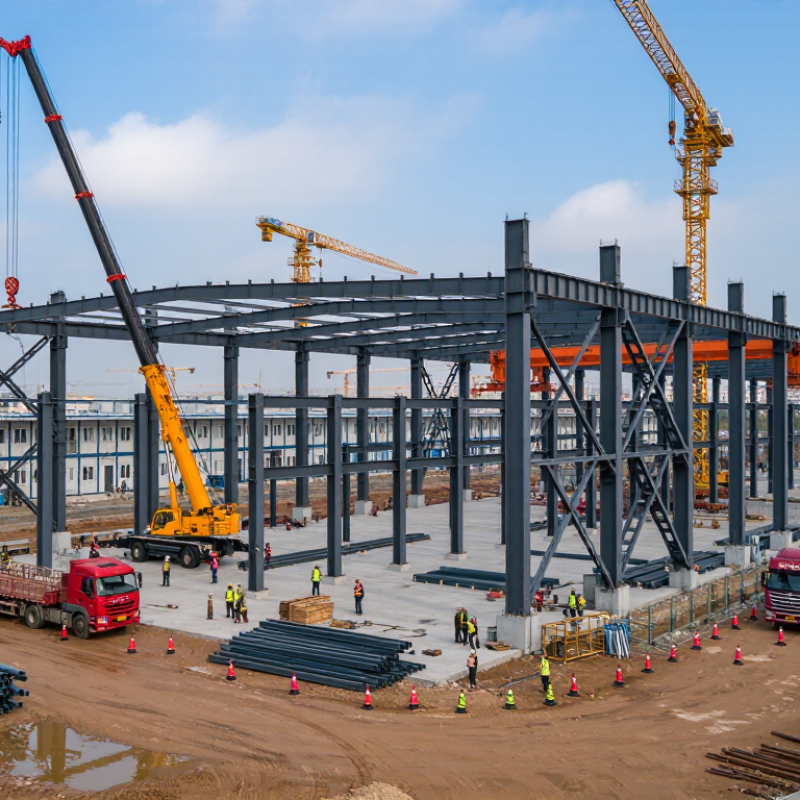
Before estimating steel workshop erection time in China, define exactly what “erection” includes. Does the schedule start when trucks arrive, or after foundations pass inspection? Does it end when the frame is bolted, or when roof sheets, wall panels, and doors are installed? These boundaries can shift the estimate by days or weeks.
Record the building’s length, width, eave height, number of bays, and crane requirements. A simple single-span frame is usually quicker to assemble than a multi-bay workshop with heavy crane beams. Note connection details too. Many high-strength bolts may slow work if access is tight. A marked-up drawing and a component list help the contractor check the planned sequence against actual deliveries.
Site conditions matter just as much. Confirm foundation readiness, ground firmness for mobile cranes, laydown space, and access for long trailers. Rain, strong wind, and summer heat can reduce safe working hours. In some regions, transport distance and local site rules also affect delivery timing. Ask for crew size, lifting equipment, shift pattern, and weather allowances in the estimate. Then separate erection time from fabrication and shipping. It is easy to overlook small delays, such as missing anchor-bolt checks or a truck arriving after crane setup. Real schedules are rarely perfect. Recheck assumptions before treating any day count as fixed.
Define the starting point clearly. It may begin after foundation approval, not truck arrival. The finish may include framing, roof sheets, wall panels, doors, and final inspections. Different boundaries can change the estimate by several weeks.
Record the length, width, eave height, bay count, and crane requirements. A single-span frame usually assembles faster than a multi-bay workshop with heavy crane beams. Tight bolt access can slow connection work.
Check foundation readiness, ground firmness, trailer access, and material storage space. Uneven ground can delay crane setup and unloading. Narrow roads may restrict long trailers.
Allow separate time for purlins, girts, bracing, roof sheets, gutters, trims, and wall panels. Alignment checks and bolt inspections can interrupt lifting work. Small tasks consume hours.
Keep fabrication, shipping, and site erection as separate schedule sections. A truck arriving after crane setup can create an avoidable delay. Recheck the boundary.
Review monthly records for wind, rain, temperature, and regional storms. Coastal sites may lose lifting days during severe storms. Northern sites may face frozen ground and winter wind limits.
A 10–15% allowance may cover weather and logistics uncertainty. It is not a universal rule. Adjust it after checking permits, routes, crane capacity, and local productivity.
Build a daily activity schedule instead of using only one total duration. Add one or two buffer days after major lifting stages. Track crane relocation, safety briefings, worker movement, and inspections.
Confirm bridge limits, restricted routes, festival traffic, and delivery windows. Check anchor bolts and embedded parts before steel arrives. Missing records can delay acceptance.
Estimating the erection time for a steel workshop in China requires a clear understanding of the project scope, site conditions, and construction sequence. To determine how to estimate erection time for a steel workshop, first define the building size, structural system, connection type, erection method, and quality requirements. Then collect essential data, including the quantity and weight of steel members, delivery schedule, available cranes, workforce capacity, site access, weather conditions, and local working restrictions.
The main steel structure installation period can be calculated by evaluating daily erection productivity and the number of crews and lifting equipment available. Afterward, add time for secondary steelwork, roof and wall systems, bracing, platforms, equipment installation, inspections, and possible rework. Finally, review the estimate against China-specific factors such as transportation distances, regional weather, labor availability, approval procedures, and coordination with suppliers and subcontractors. Including reasonable allowances for delays will produce a more practical and reliable schedule.
