Understanding "what causes structural steel failure in high temperatures" is crucial for safety in construction and engineering. High temperatures can drastically affect the strength and integrity of steel structures. According to research from the American Institute of Steel Construction (AISC), steel loses approximately 50% of its strength at around 1,100 degrees Fahrenheit. This significant reduction poses risks that must be addressed.
Dr. Emily Carter, a leading expert in structural engineering, states, "Steel's performance at elevated temperatures is often underestimated." Her insight highlights a critical area of concern. The temperature escalation can lead to thermal expansion, creep, and ultimately buckling or fracture in structural members. Understanding these mechanisms is essential for designing resilient structures.
Moreover, it’s not only the temperature but also the duration of exposure that matters. Fire, a common culprit, can compromise steel strength over time. Regular inspections and advancements in material science could mitigate risks, yet many fail to implement these solutions. Addressing the failure mechanisms while acknowledging the unpredictability of high-temperature scenarios is integral for future safety standards in the industry.
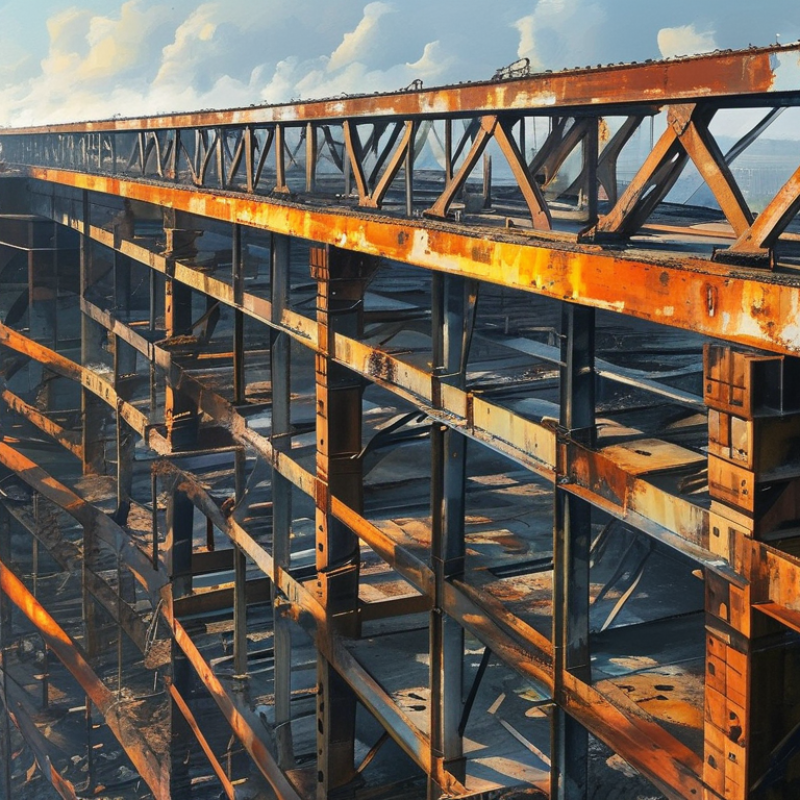
Factors Contributing to Structural Steel Weakening at Elevated Temperatures
Structural steel is known for its strength, but it behaves differently at high temperatures. When exposed to elevated heat, steel can weaken significantly. According to studies, structural steel loses about 50% of its yield strength at around 1,100°F (593°C). This temperature is commonly reached in fires, raising serious safety concerns.
Several factors contribute to this weakening effect. First, the material's microstructure changes when heated. This alteration can increase the ductility but lower the overall strength. Factors like time of exposure and temperature gradient can also influence how steel performs under thermal stress. A report by the National Institute of Standards and Technology indicates that longer exposures to high temperatures can lead to catastrophic failures.
In real-world situations, the environment plays a critical role. For example, confined spaces may retain heat longer, exacerbating the issue. Fire protection measures, such as insulation, can mitigate risks, but they may not always be effective. Moreover, not all steel grades respond the same way to heat. Therefore, understanding the specific application and potential risks is essential for engineers. These complexities highlight the need for ongoing research and careful consideration in design practices.
Thermal Expansion and Its Impact on Structural Integrity of Steel
High temperatures can significantly impact the structural integrity of steel. When steel is heated, it undergoes thermal expansion. This expansion can cause stress within the material. Structural components may deform or even fail when temperatures rise excessively.
Steel structures are designed with certain temperature limits in mind. Exceeding these limits can lead to unexpected failures. Thermal expansion affects how connections between different parts of a structure interact. For instance, bolts may become loose, affecting overall stability. This issue is particularly relevant in fire scenarios, where intense heat can cause rapid expansion.
Engineers must consider thermal expansion when designing steel structures. Proper calculations and material selection are crucial. Yet, even the best designs can face unforeseen challenges during extreme conditions. Continuous monitoring and regular maintenance are essential to address these potential vulnerabilities. Understanding how thermal expansion affects steel behavior can help in creating safer and more reliable structures.
What Causes Structural Steel Failure at High Temperatures? - Thermal Expansion and Its Impact on Structural Integrity of Steel
| Material Type |
Elastic Limit (MPa) |
Yield Strength (MPa) |
Melting Point (°C) |
Thermal Expansion Coefficient (×10-6/°C) |
Failure Temperature (°C) |
| Structural Steel S235 |
235 |
340 |
1425 |
12.0 |
600 |
| Structural Steel S355 |
355 |
470 |
1425 |
12.0 |
550 |
| Stainless Steel 304 |
215 |
520 |
1400 |
16.0 |
800 |
| High Strength Low Alloy Steel |
470 |
620 |
1500 |
11.0 |
700 |
The Role of Yield Strength Reduction in Steel Under High Heat Conditions
Structural steel exhibits a significant reduction in yield strength when exposed to high temperatures. As steel warms, its atomic structure alters. This change impacts its strength and ability to support loads. At around 600 degrees Celsius, yield strength can drop to nearly half of its original capacity. This weakening can lead to unexpected failures during a fire or extreme heat exposure.
Testing and modeling are critical in understanding this behavior. Engineers often conduct experiments at various temperatures to observe the reduction in yield strength. However, these tests may not always replicate real-world scenarios. The effects of high heat can vary depending on other factors. For example, the type of steel, the presence of any coatings, and the environment all play a role.
Despite advances in knowledge, predictions can falter. Some existing models might underestimate the reduction in strength. Decisions based on inaccurate models can have serious repercussions. A reassessment of structural design under these conditions is vital. Understanding the nuances of steel behavior at high temperatures will enhance safety practices. Engaging with materials and fire challenges remains an ongoing endeavor for many professionals in the field.
Effect of Temperature on Yield Strength of Structural Steel
This chart illustrates the reduction of yield strength in structural steel as temperatures increase. Yield strength decreases significantly at higher temperatures, which is crucial for understanding structural integrity in high heat conditions.
Oxidation and Corrosion Effects on Steel During High-Temperature Exposure
High temperatures can significantly compromise the integrity of structural steel. One major culprit is oxidation. When steel is exposed to elevated temperatures, the protective oxide layer may thin or break down. This makes the steel susceptible to further degradation. Oxidation can lead to a rapid decline in mechanical properties. The steel becomes weaker and loses its load-bearing capacity.
Corrosion is another critical factor to consider. During high-temperature exposure, environmental conditions can exacerbate corrosive elements. Moisture and chemicals may combine with high heat, leading to accelerated corrosion rates. This process can be surprisingly fast, risking the structural integrity of buildings and bridges. If unnoticed, these issues can escalate, causing severe, uncontrolled failures.
Understanding these effects is essential. Engineers must evaluate materials carefully in construction projects. They must also consider environmental factors. The interplay between heat, oxidation, and corrosion needs constant monitoring. Small signs of degradation may indicate larger problems ahead. Awareness of these risks is crucial for sustaining safety and reliability in structural steel applications.
Design Considerations for Mitigating Steel Failure in Fire Scenarios
Structural steel is known for its strength and durability, but high temperatures can undermine these properties. In fire scenarios, steel loses about 50% of its strength at temperatures exceeding 1,100 degrees Fahrenheit. This results in reduced load-bearing capacity, potentially leading to catastrophic failure. Understanding the behavior of steel under thermal stress is crucial for designing resilient structures.
Design considerations include the use of fireproof coatings that delay heat transfer. Insulating materials can significantly improve a structure’s performance in a fire. According to the National Fire Protection Association (NFPA), buildings that incorporate such materials experience 30% fewer total losses in fire incidents. Furthermore, regular maintenance and inspections are vital. They ensure that fire protection systems remain effective.
Research shows that testing steel behavior under realistic fire conditions can highlight potential vulnerabilities. Engineers must consider the possibility of thermal expansion causing structural misalignment. Even small design flaws can have serious implications. Ensuring redundancy in structural elements can also mitigate failure risks. Overall, a comprehensive approach to design can enhance safety and resilience in the face of fire.
Conclusion
The article "What Causes Structural Steel Failure at High Temperatures?" examines the various factors that contribute to the weakening of structural steel when exposed to elevated temperatures. It discusses how thermal expansion can compromise the structural integrity of steel, leading to potential failures in critical applications. Additionally, the reduction of yield strength in steel under high heat conditions is highlighted, demonstrating how its mechanical properties degrade as temperature rises.
Furthermore, the effects of oxidation and corrosion during high-temperature exposure are analyzed, emphasizing the long-term impacts on the steel's durability. The article also provides design considerations that can mitigate the risk of steel failure in fire scenarios, underscoring the importance of proper engineering to ensure safety and resilience of structures. Ultimately, understanding what causes structural steel failure in high temperatures is essential for improving the performance and reliability of steel frameworks in challenging environments.
 Bildon Steel
